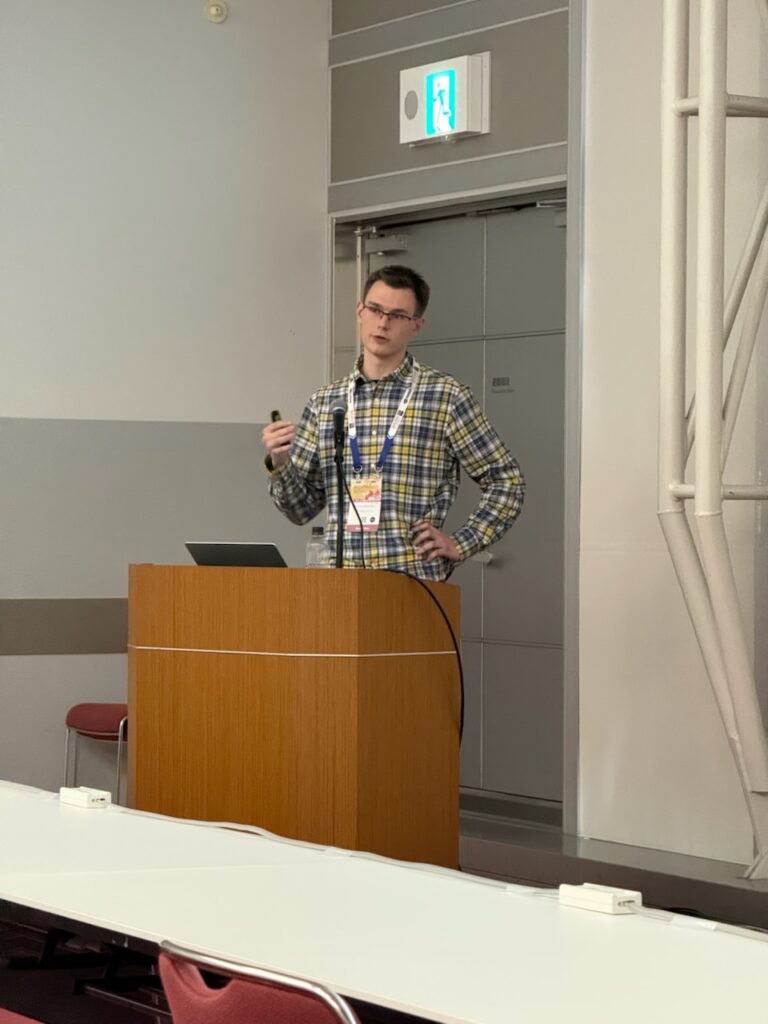
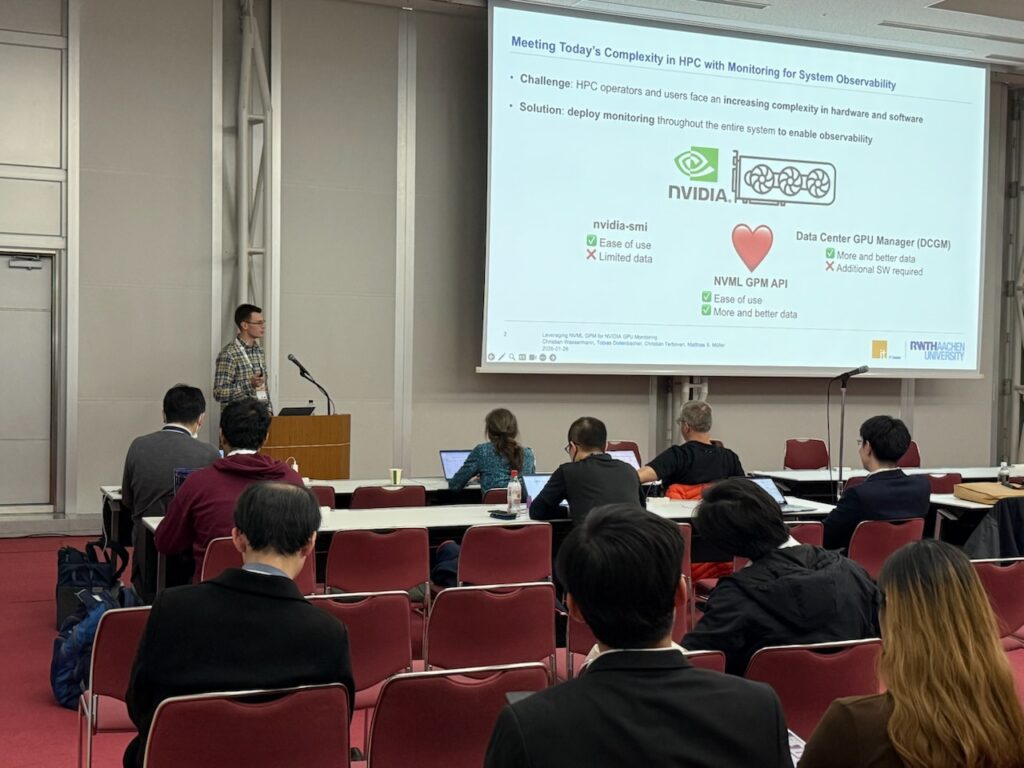
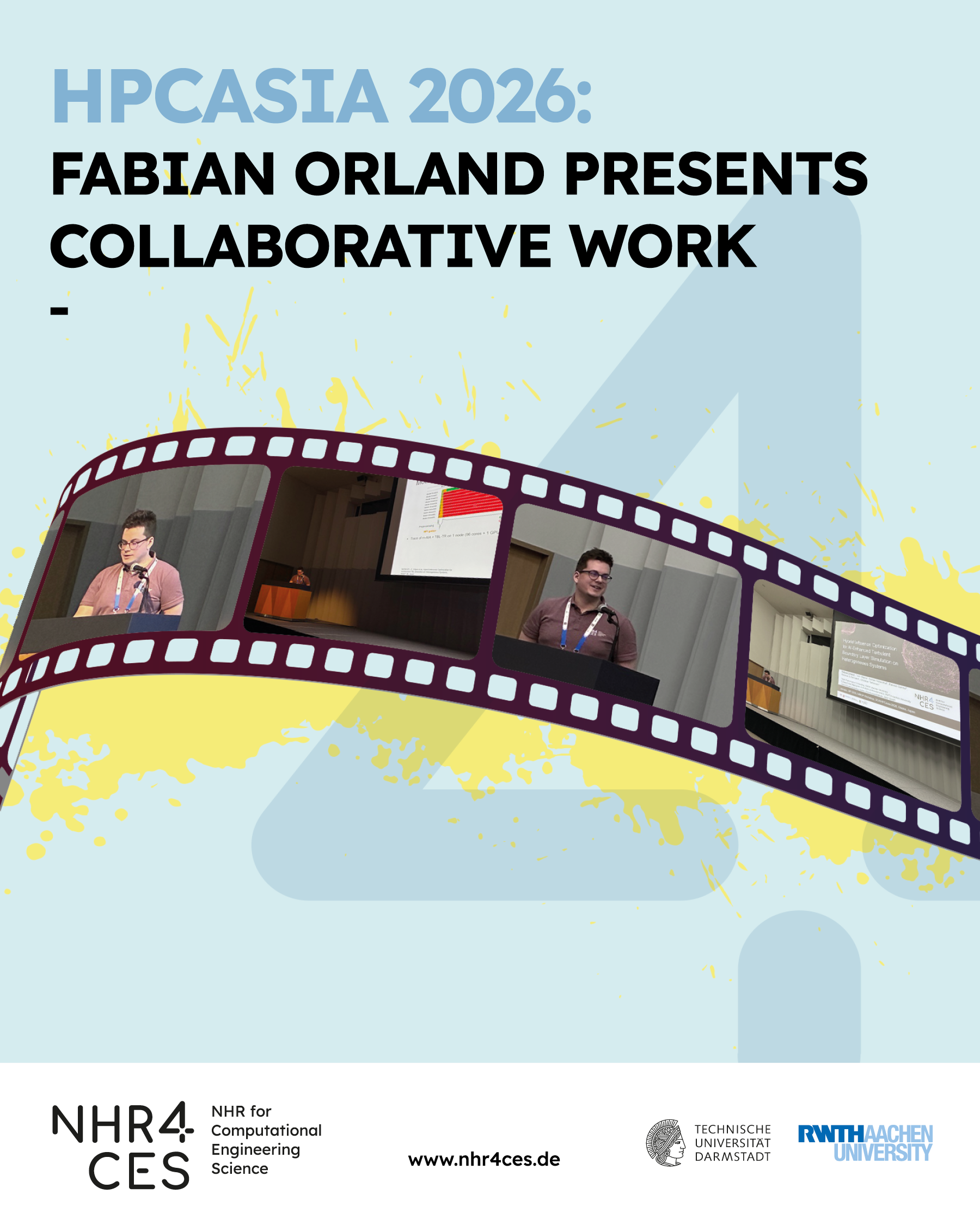
At SCA/HPCAsia 2026, our doctoral students Christian Wassermann, who is part of the HPC group at IT Center RWTH Aachen and is working on the NHR future project Energy efficiency and operational costs in High Performance Computing (EEC), and Fabian Orland, member of our CSG Parallelism and Performance, presented their scientific work this week! Fabians collaborative project „Hybrid Inference Optimization for AI-Enhanced Turbulent Boundary Layer Simulation on Heterogeneous Systems“ focuses on:
Manipulating the turbulent boundary layer (TBL) around an airfoil via actuation is a promising technique, that has been shown to result in power savings and lower emission of greenhouse gases harming the environment. However, choosing the most optimal actuation parameters based on the flow conditions is a highly complex task, that may be solved using artificial intelligence.
In previous work, a TBL-Transformer was coupled with the multi-physics PDE solver framework m-AIA to accelerate the computationally expensive generation of TBL data for training. The authors present now a hybrid approach to optimize the inference of the TBL-Transformer in a coupled AI-enhanced simulation on heterogeneous systems.
The approach fully exploits the heterogeneous hardware by splitting the inference work between CPUs and GPUs according to an analytically derived optimal hybrid work distribution. They demonstrate that hybrid inference yields significantly reduced runtimes that directly translate into a more energy efficient execution of the coupled simulation.
Authors: Fabian Orland, Tom Hilgers, Fabian Hübenthal, Rakesh Sarma, Andreas Lintermann, Christian Terboven
This work is a collaboration between the AIA – Institute of Aerodynamics and Chair of Fluid Mechanics – at RWTH Aachen University, the Jülich Supercomputing Centre (JSC) and NHR4CES.
In addition to this collaboration, it is also very nice to see how young aspiring scientists can be involved in such projects: Tom Hilgers, Computer Science Master’s Student at RWTH worked on the project with great motivation and delivered excellent results. We are always happy to work with young scientists during their studies. Fabian presented the paper at the workshop „Multi-Scale, Multi-physics, Coupled Problems and AI enhanced simulations on HPC (MMCP)“ yesterday. Thanks to Neda Ebrahimi Pour, Sabine Roller, and Ryoji Takaki for organizing this great workshop!
Have a look at the paper!
Advancing GPU Observability and Sustainable HPC at SCA/HPCAsia 2026
Christian Wassermann presented his new research paper „Leveraging NVML GPM for NVIDIA GPU Monitoring“. With the rise of machine learning workloads, GPUs have become one of the most important components of today’s HPC systems. To ensure their efficient utilization, monitoring enables observability of user applications at the system scale. The work supports these efforts by providing a light-weight, open-source monitoring tool that leverages the NVML GPM API. Try it yourself! The group highlight the utility of the collectable data in three use cases for evaluating the performance of GPU kernel executions, modeling the GPU energy consumption of workloads, and analyzing the overall cluster workload. They include a validation of the available metrics and propose a post-processing methodology to increase the value of the NVML GPM data for application-level insights.
This paper is the collective achievement of four authors from the HPC group at IT Center RWTH Aachen: Christian Wassermann, Tobias Dollenbacher, Christian Terboven, and Matthias S. Müller. It was presented at the Energy Efficient HPC State of the Practice (EE HPC SOP) Workshop 2026 held in conjunction with SCA/HPCAsia 2026 and organized by Ayesha Afzal, Fumiyoshi Shoji, Michael Ott, and Natalie Bates. Thank you for bringing like-minded people together! We already look forward to the next edition of this great workshop!
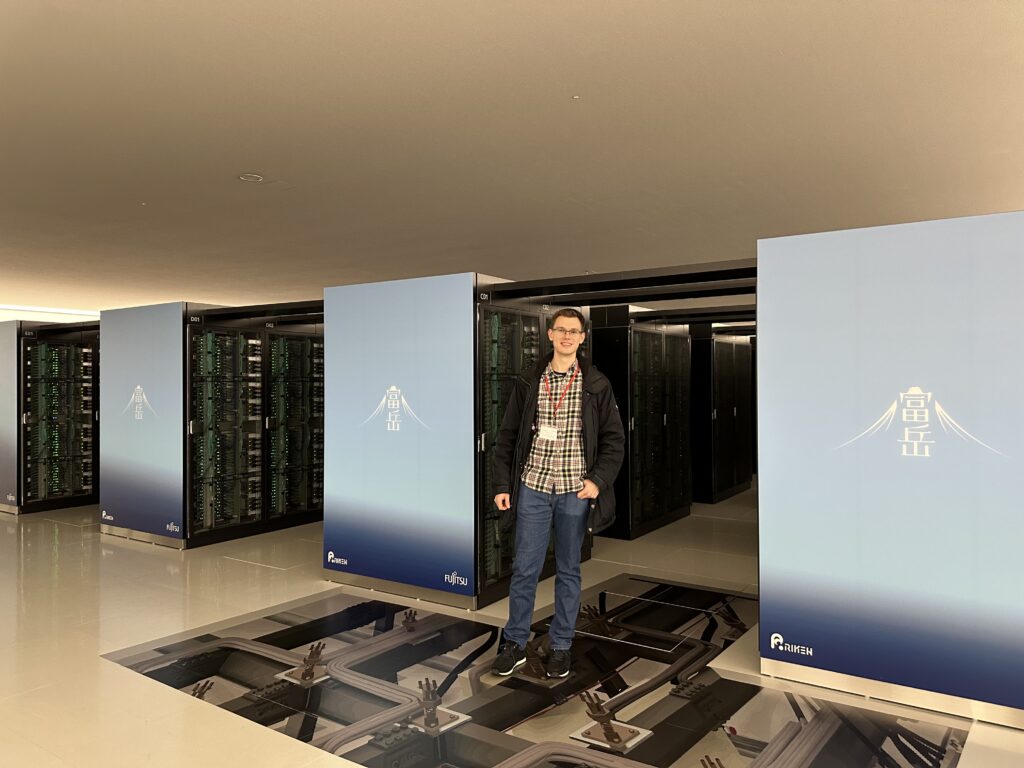
Already last week, the RIKEN Center for Computational Science (R-CCS) hosted the Asian HPC Infrastructure Workshop 2026, bringing together specialists for HPC data center design and operation to discuss the latest infrastructure trends and technologies, Christian Wassermann presented on our sustainability efforts as part of the HPC Sustainability Working Group: They are working on defining a new sustainability metric for data centers that promotes the use of renewable energy, considers the efficiency of the cooling infrastructure, and encourages higher cluster allocation rates.
If you are interested in joining the discussions or just staying up to date with the recent developments, please fill out the interest form! Together with Jason Wells and Raminder Singh from Harvard Faculty of Arts and Sciences Research Computing as well as Richard Knepper from Cornell Center for Advanced Computing, they are looking to broaden the diversity of participating organizations. New members from all countries are welcome to contribute towards the common goal of reducing the global carbon emissions related to the operation of HPC resources.