Project
Computational exploration of small molecule binding to gastrin-releasing peptide receptor for precision medicine
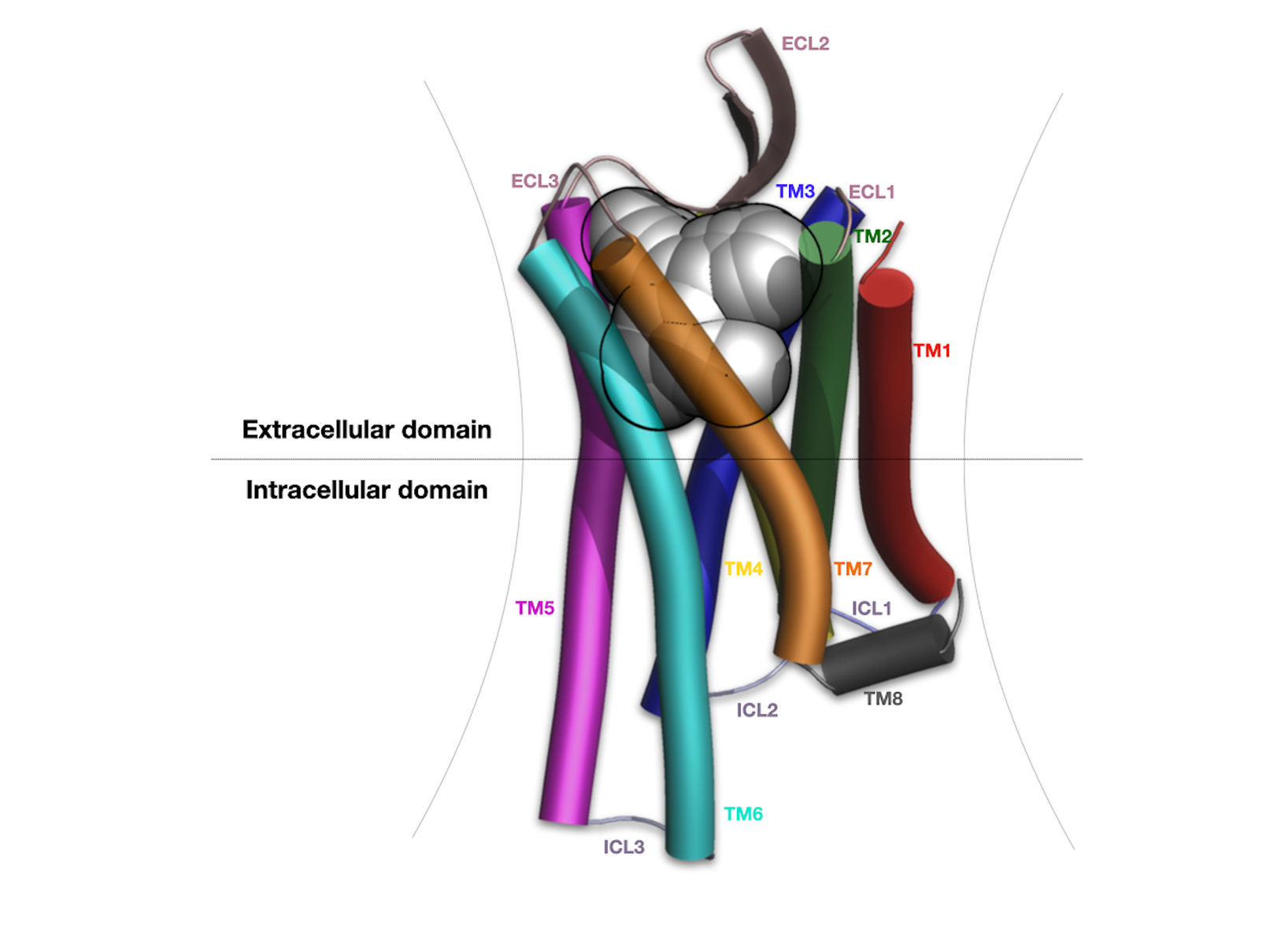 Figure 1: Cartoon representation of GPCR structure and main domains in coloured cilinders.The orthosteric binding pocket of GPCRs is highlighted in grey spheres.
 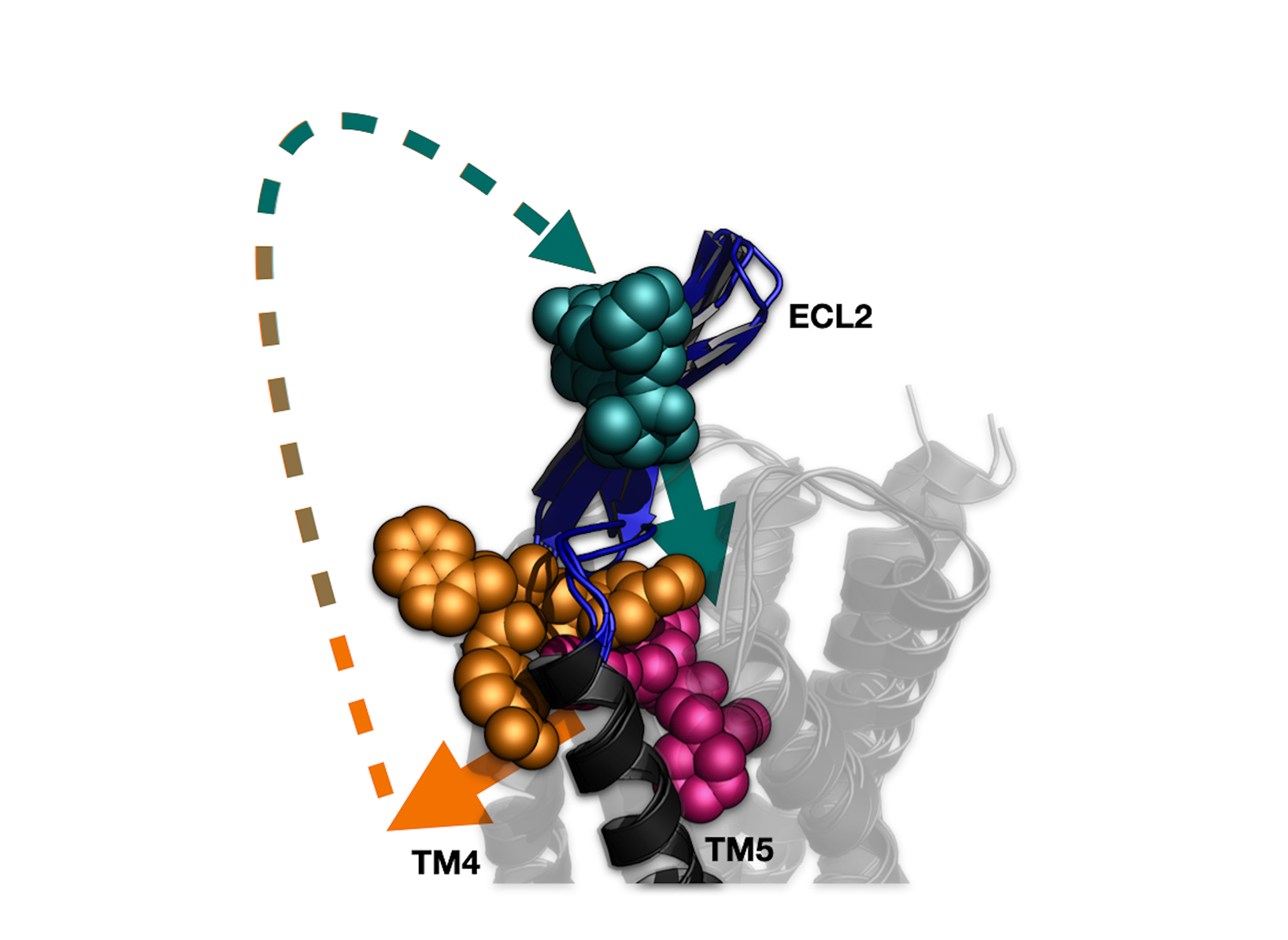 Figure 2: Starting position of the ligand in pink. Position of the ligand during the "above the loop" unbiding in orange. Ligand after the unbinding, before the "above the loop" binding in blue.
 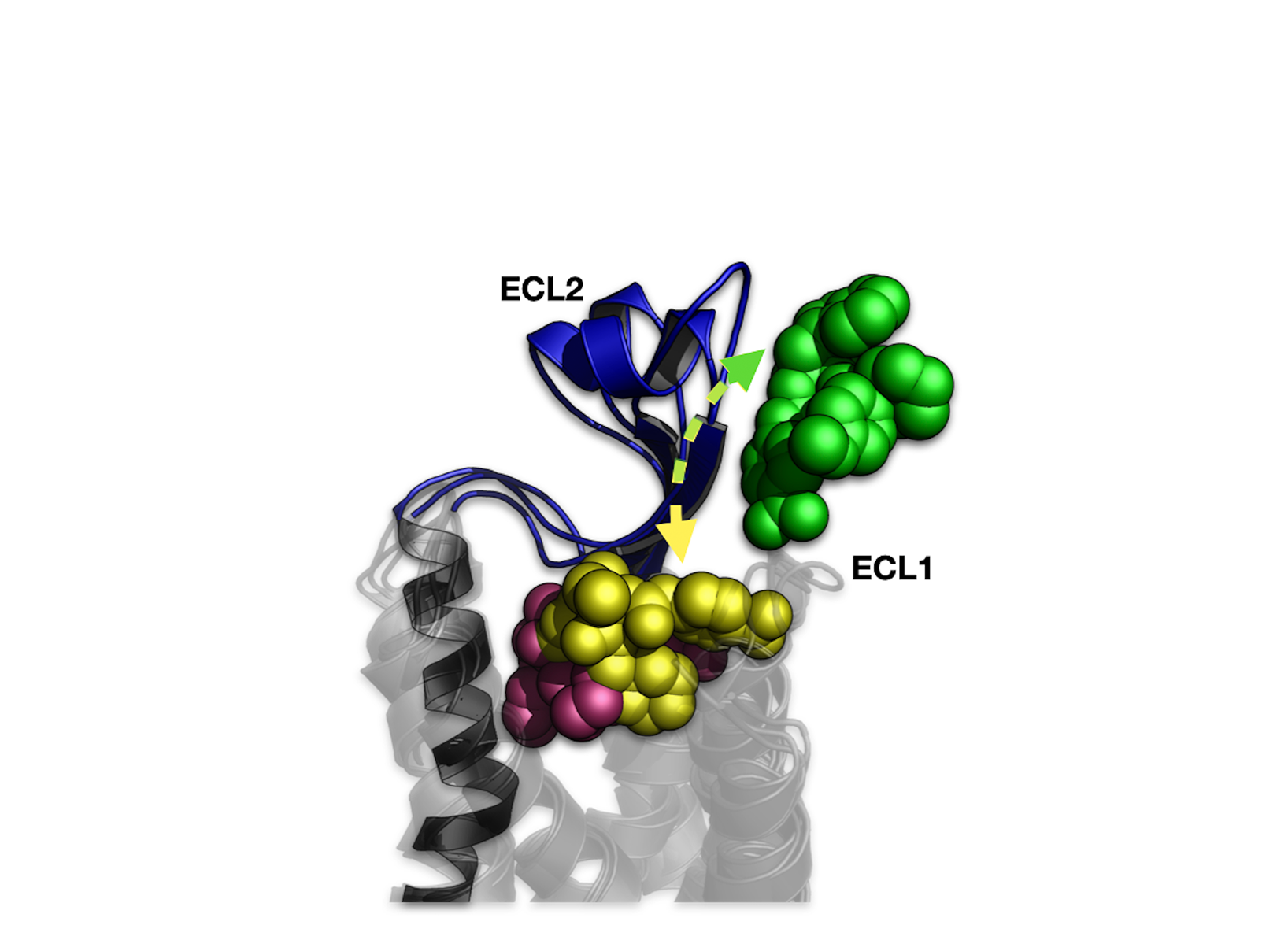 Figure 3: Ligand bound (pink), in a transient state (yellow) and after the "canonical unbinding" (green). The bidirectional green/yellow arrow represents the path during both events.
 The Gastrin-Releasing Peptide Receptor (GRPR), a Class A G-protein coupled receptor (GPCR) (Fig.1), is a critical target in oncology due to its significant overexpression in malignancies such as prostate, breast, and small-cell lung cancers. While endogenous ligands, like the 27-residue neuropeptide GRP, regulate gastrointestinal functions, their dysregulation promotes tumor progression and metastasis. Consequently, GRPR antagonists have emerged as promising candidates for cancer diagnosis and radiotheranostics. Among available antagonists, the small molecule PD176252 serves as the reference scaffold due to its high affinity (Ki 1.0 nM). However, traditional drug discovery has been limited by a lack of structural data until the recent release of experimental structures in 2023. While static structures provide a snapshot of the bound state, they fail to capture the molecular mechanisms governing ligand recognition and the dynamic processes of association and dissociation. This work, that has employed around 3 Mi of core hours on CLAIX, focuses on the exploration of these rare binding/unbinding events using enhanced sampling techniques to delineate the functional role of extracellular loops (ECLs) in regulating ligand access to the orthosteric pocket.
Project Details
Project term
December 5, 2024–November 16, 2025
Affiliations
Forschungszentrum Jülich
Institute
Computational Biomedicine Institute
Principal Investigator
Methods
The system was prepared using the CHARMM-GUI server, embedding the complex in a 70:30 POPC/cholesterol bilayer solvated with OPC water and neutralized with 0.15 M KCl. The system was parameterized using the ff19SB force field for the receptor, lipid21 for the membrane components, and GAFF2 for the ligand. Following a two-stage energy minimization process utilizing both steepest descent and conjugate gradient algorithms, the system underwent NVT and NPT equilibration phases where positional restraints on the protein and lipids were gradually released. Finally, preliminary 1 µs production runs were conducted using GROMACS 2023 with a 1 fs time step at 310 K and 1 bar.
To overcome the time-scale limitations of standard molecular dynamics (MD), which often fail to capture rare binding events, this study utilized Well-Tempered Metadynamics (WT-MetaD). This technique enhances configurational sampling by adding a history-dependent bias potential to specific collective variables (CVs), allowing the system to escape local energy minima. The simulations were performed using GROMACS 2021 patched with PLUMED 2.9. CV1 was defined as the distance between the center of mass (COM) of PD176252 and the COM of the GRPR binding pocket. CV2 accounted for the number of contacts between the ligand and the receptor residues identified in plain MD fingerprints with persistence greater than 60%. A funnel-shaped restraint was applied around the ECL2 region to prevent the exploration of non-relevant regions and improve the statistics of binding/unbinding attempts. The Gaussian deposition rate was 0.5 ps, the initial height was 1.2 kJ/mol, and the bias factor was set to 15. The system was simulated for 1.2 μs to capture multiple binding and unbinding transitions.
Results
The WT-MetaD simulations revealed a pronounced asymmetry between the association and dissociation pathways of PD176252, highlighting the highly dynamic nature of the GRPR extracellular domain (Fig.2-3). The ligand followed two distinct escape routes during dissociation. The “Under the loop unbinding”, is a constrained pathway beneath the terminal segment of ECL2. Key residues involved included and . As the indole exited, formed a π-stacking interaction with the p-nitrophenyl group of the ligand, providing sufficient space for the terminal portion to slip outside the pocket toward the TM4-TM5 helices. The “Canonical unbinding”, in contrast, is a direct passage through the main extracellular opening involving partial cooperation among the three extracellular loops.
The association events occurred primarily through the upper part of the receptor via two different entry points. The fastest route observed is the “Above the loop binding” where the ligand approached directly over the distal segment of ECL2. acted as a critical anchor, capturing the ligand as it approached the orthosteric site. In the “Canonical binding”, the ECL1 played a primary role in this path. Persistent interactions with residues , , and anchored and guided the ligand into the pocket.
Discussion
The metadynamics results provide a comprehensive atomistic picture of the GRPR binding process, suggesting that ECL1 and ECL2 function as dynamic gates. The discovery of asymmetric behavior suggests that the entry and exit process of ligands to the binding pocket is governed by different conformational rearrangements. A crucial finding is that the opening and closing of these gates are finely regulated by specific inter-loop interactions. During “canonical unbinding,” the p-nitrophenyl group must disrupt the contact to move ECL2 outward. In contrast, “canonical binding” is regulated by different residues, such as and . The identification of as a critical recognition element is of particular importance for drug design. Because this residue is actively involved in capturing and stabilizing the ligand as it begins approaching the orthosteric site, leveraging this interaction could tailor binding kinetics. Furthermore, the “under the loop” route across transmembrane helices suggests that hydrophobic ligands may exploit the membrane to exit, a phenomenon noted in other Class A GPCRs.
In conclusion, these results suggest that future drug design efforts should focus not only on maximizing hydrophobic interactions within the binding pocket—specifically residues like and identified in preliminary studies—but also on the dynamic nature of the ECLs to optimize the rational development of more potent and selective GRPR-targeted therapeutics.
Additional Project Information
DFG classification: 310 Statistical Physics, Soft Matter, Biological Physics, Nonlinear Dynamics
Software: Gromacs, PLUMED
Cluster: CLAIX
Publications
PhD thesis:
Camilla Guccione,
From structural dynamics to drug repurposing: computational approaches in the context of precision medicine,
PhD thesis, 2026