Fabian Orland: Coupling CFD Solvers with Deep Learning
Working on interdisciplinary research with real-world impact at the intersection of HPC, CFD, and AI has been Fabian Orland's focus throughout his five years at NHR4CES. Yesterday marked a major milestone in his NHR4CES journey: Congratulations to Fabian on successfully defending his doctoral dissertation!
Fabian joined NHR4CES at its launch in 2021 and is part of the CSG Parallelism & Performance. He enjoys the interdisciplinary work in NHR4CES. Already with the beginning of NHR4CES it was clear that the SDL Energy Conversion’s mission to investigate data-driven turbulence and combustion models requires the
collaboration with the CSG Parallelism and Performance. Fabians technical HPC expertise and his personal research interest regarding performance analysis and optimization, especially for CFD applications aligned very well with this collaboration, which retrospectively also marked the kickoff for his dissertation topic.
Fabian’s journey in NHR4CES
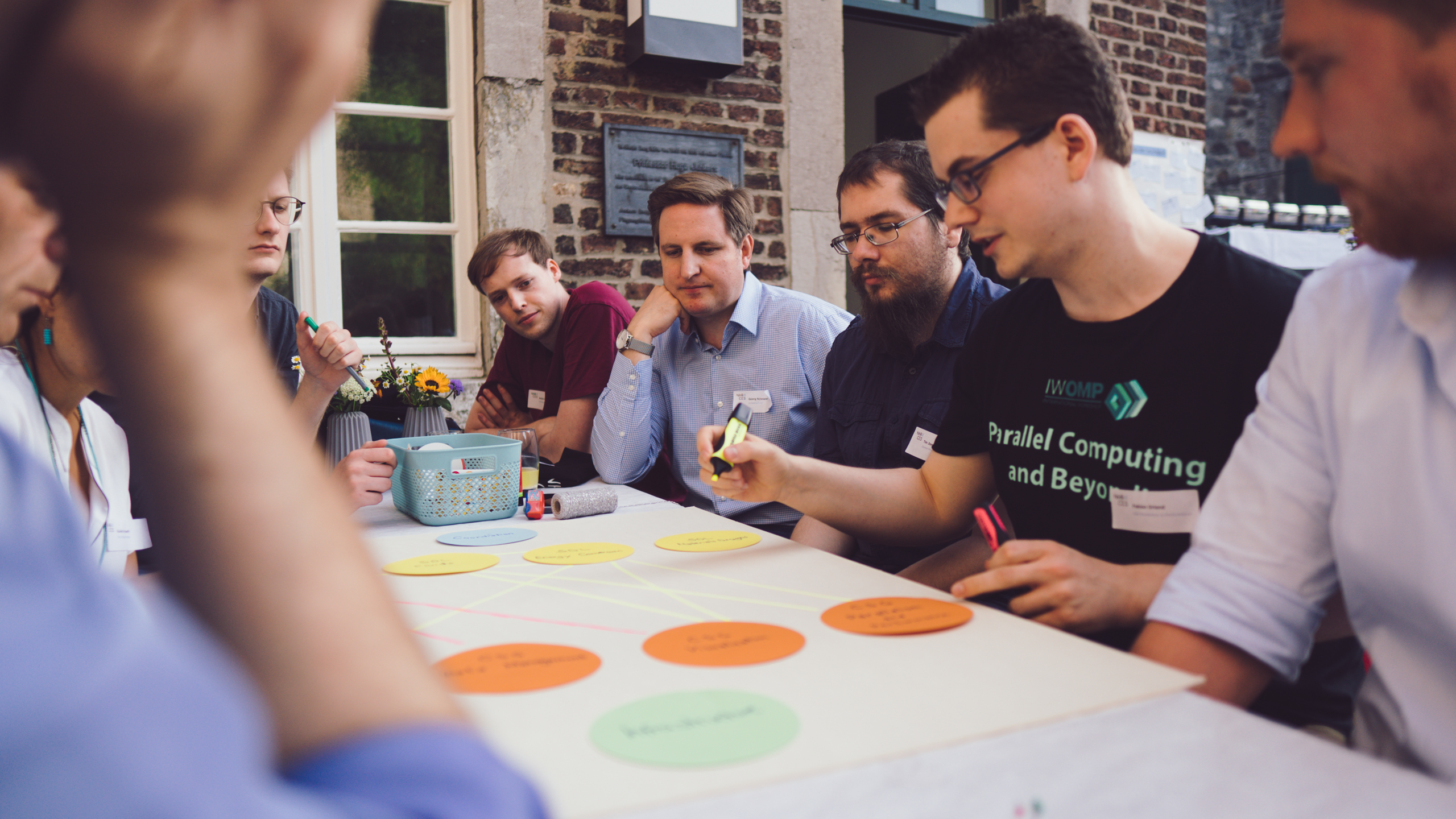 From the beginning – already at the NHR4CES kick-off in 2021 in Aachen – Fabian has actively contributed to NHR4CES and the CSG Parallelism and Performance, even if he is wearing the wrong shirt in this picture...
 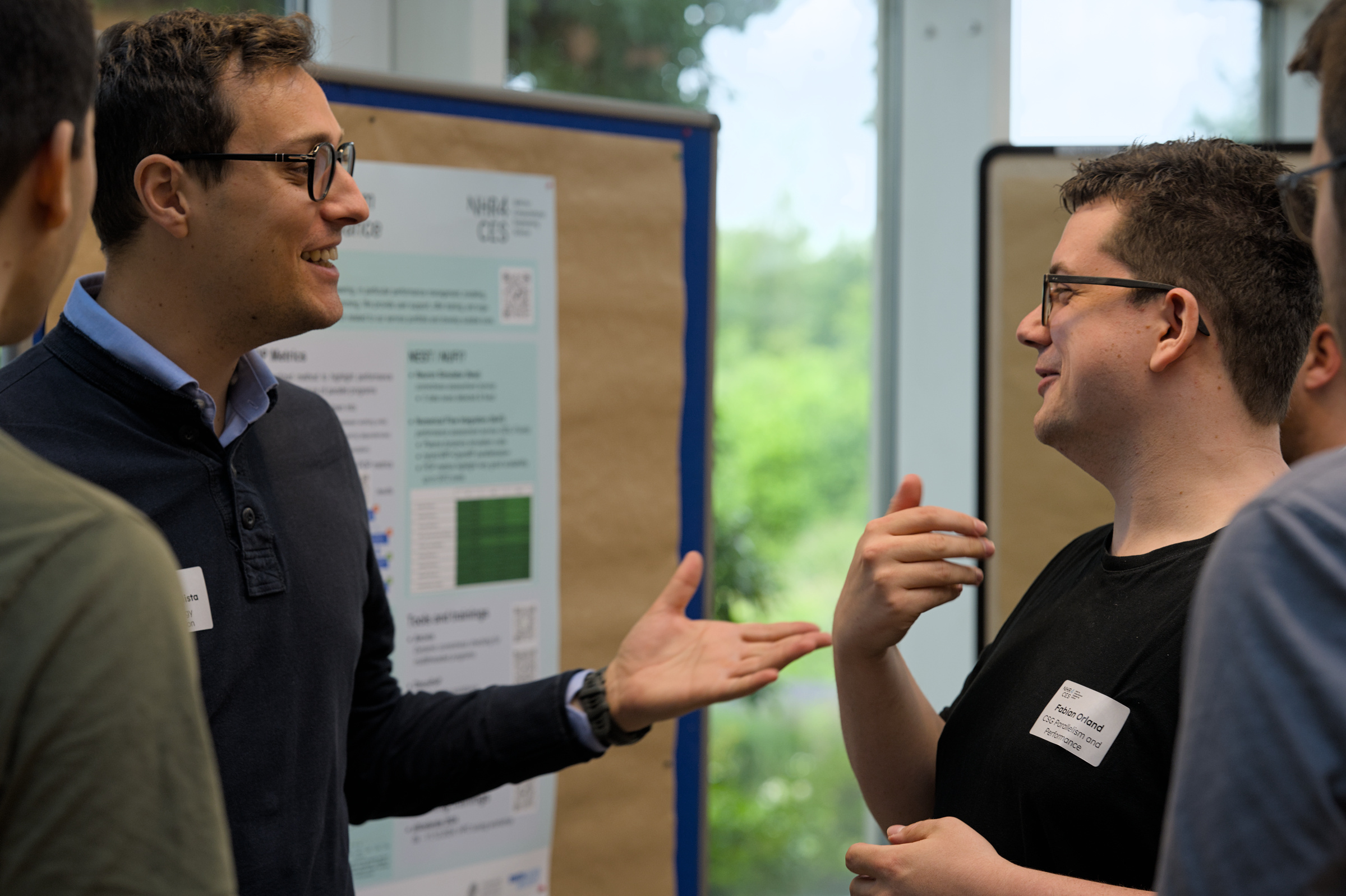 During team events, Fabian was always a great person to discuss the latest research with.
 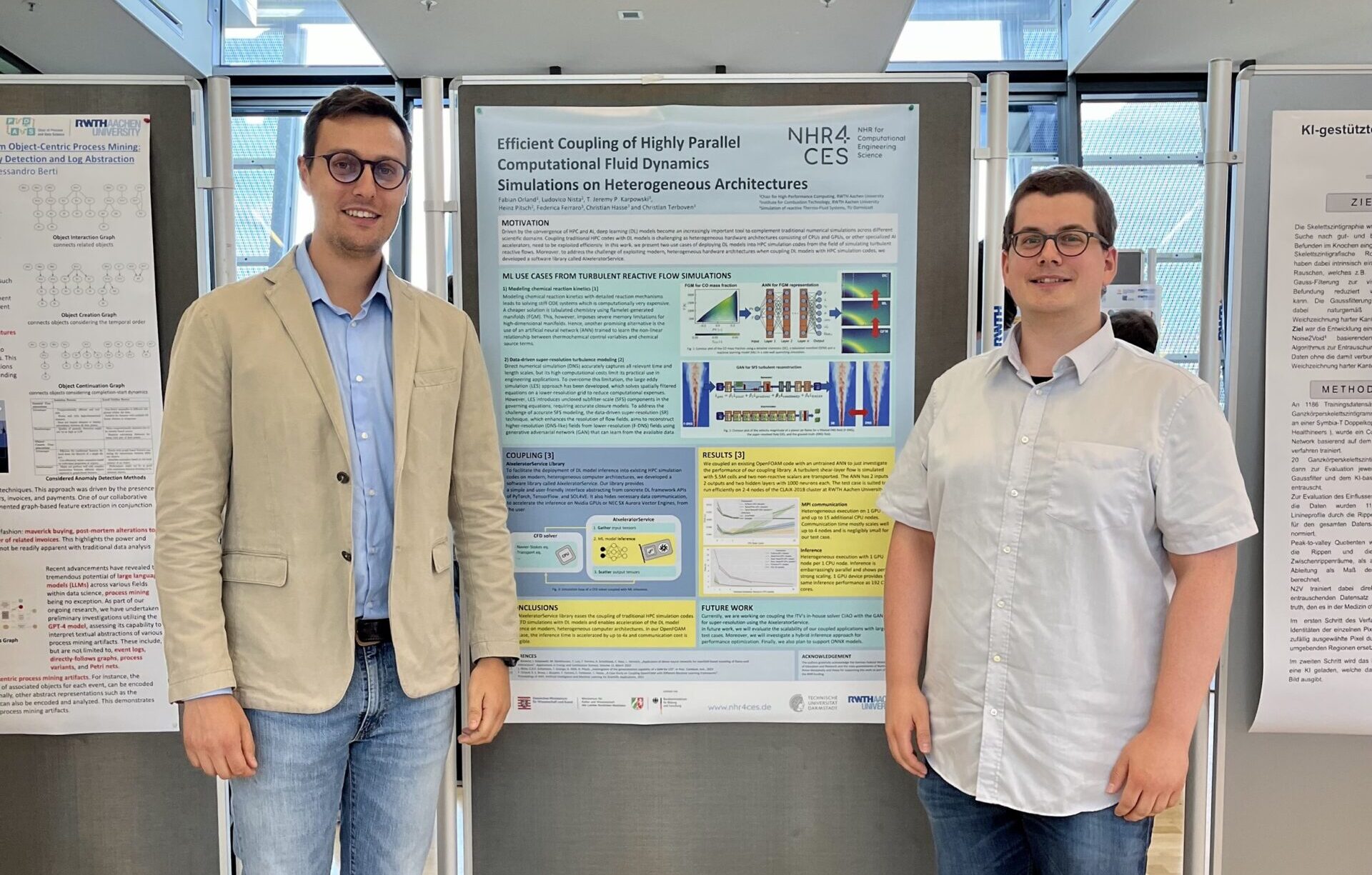 SDL Energy Conversion (Ludovico) + CSG Parallelism and Performance (Fabian) = Great research!
 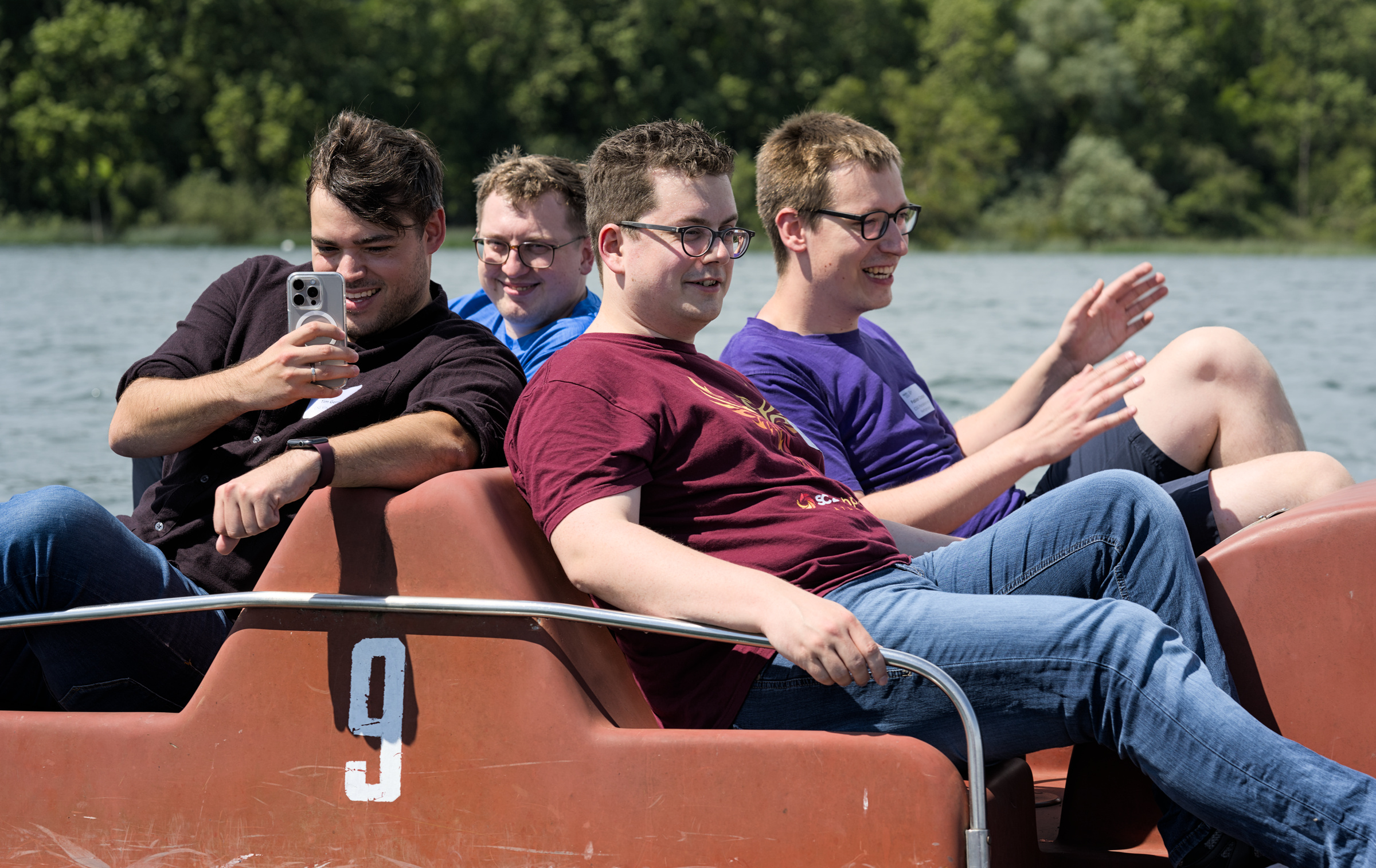 And he's just as skilled at steering a boat as he is at coupling CFD solvers with deep learning.
 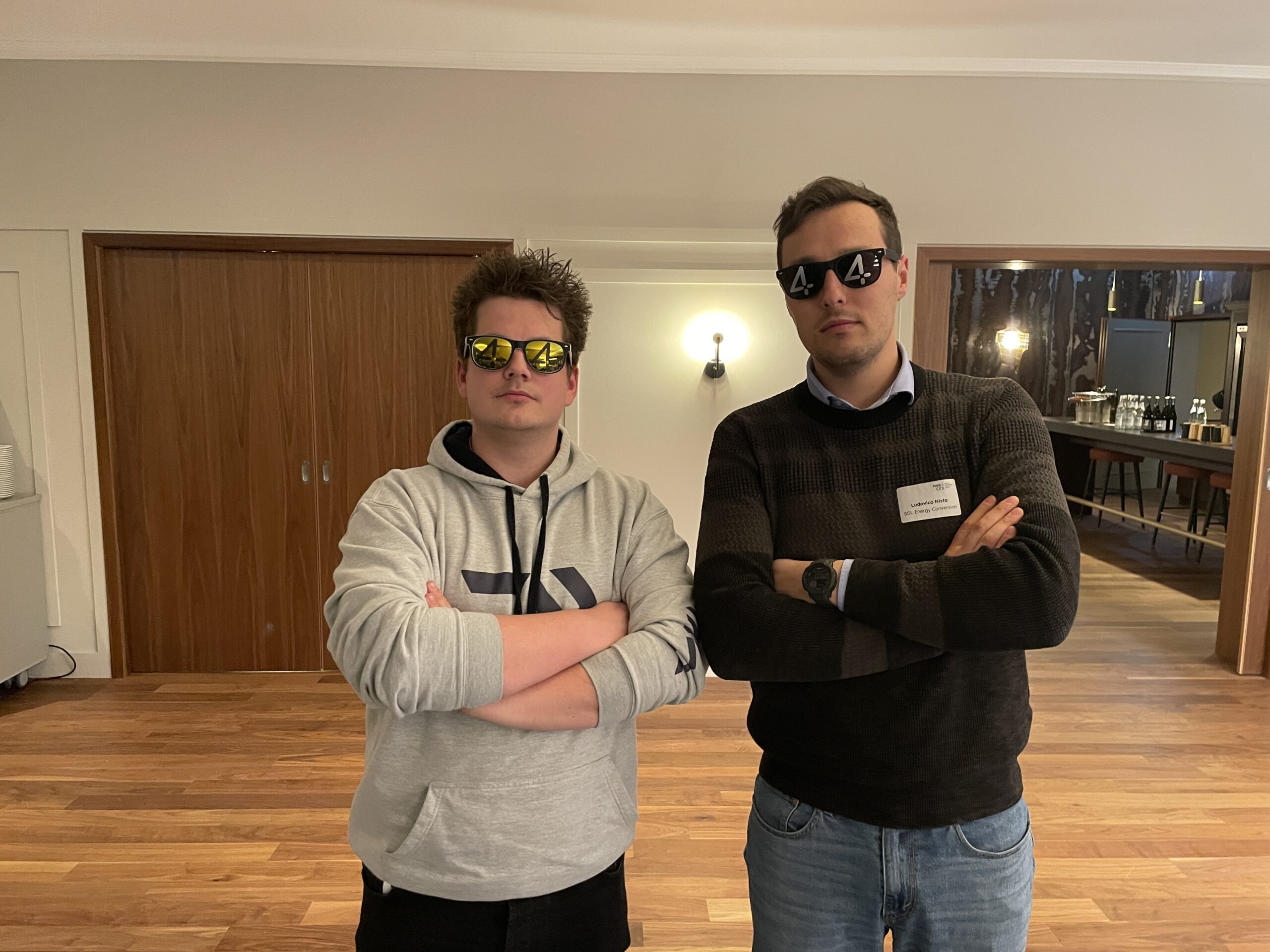 Fabian always brought a positive attitude to the team and was a great person to discuss the latest research with.
 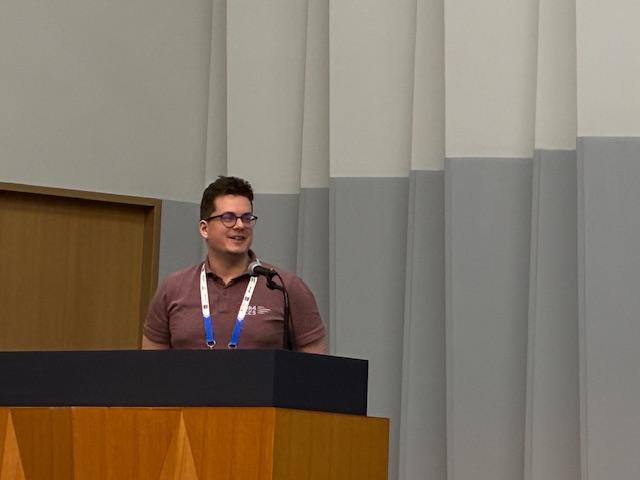 And in the end: He got the right T-Shirt!
 Efficient Coupling of Highly Parallel Computational Fluid Dynamics Simulations with Deep Learning on Heterogeneous Architectures
In recent years, data-driven modeling techniques such as deep learning (DL) have become an increasingly important tool to complement traditional numerical simulations across different scientific domains. For example, in the field of (reactive) turbulent flow simulation new use cases integrate the inference of trained deep learning models into traditional numerical CFD solvers for turbulence or combustion modeling. Coupling traditional HPC codes such as highly parallel CFD solvers with new DL models poses a computational challenge as the heterogeneous hardware of current HPC systems comprising CPUs and GPUs needs to be exploited efficiently. To bridge this gap, a general coupling method has been developed in Fabian’s thesis and evaluated using four real-world coupled CFD+DL use cases. The general coupling method has been implemented into an
open-source software library and superior scalability compared to related methods has been demonstrated. Moreover, two extensions to the general coupling method are presented: 1) a hybrid inference method and 2) a coupled online training extension. Based on a new performance model to find the optimal hybrid work distribution, the hybrid inference method employs CPUs and GPUs to solve the given inference workload collaboratively to fully exploit current heterogeneous systems. The speedup yielded by this method is proportional to the ratio of CPUs to GPUs and results in a more energy efficient execution of the coupled solver. The flexibility of the developed general coupling method is demonstrated by a coupled online training extension, that has been successfully employed to train one of the investigated data-driven combustion models.
NHR4CES: bringing together domain and performance experts
Throughout his work in NHR4CES, Fabian provided general performance engineering support for the users of our national HPC system CLAIX. In particular, he is the main person responsible for enabling new, unestablished HPC use cases by developing general solutions following a co-design approach with domain experts in the national HPC user base. He enjoys the close collaboration with domain experts from the SDL Energy Conversion and SDL Fluids on interdisciplinary research problems with real-world applications combining HPC, CFD, and AI. In his opinion, NHR4CES brought
together domain experts (SDL-EC, SDL-Fluids) and performance experts (CSG-PP) to collaboratively work on new use cases that require the coupling of CFD solvers with deep learning models for inference. NHR4CES also provided hardware resources (CLAIX) to evaluate the general coupling method developed in his thesis with highly parallel real world numerical simulation cases. The NHR4CES funding also allowed him to increase the visibility of his PhD research by presenting important results on international scientific venues and to establish a network with other experts in the field!
Academic Journey
Fabian’s academic path combines a strong foundation in computer science with a passion for scalable computing:
10/2013 – 07/2017: Bachelor of Science in Computer Science at RWTH Aachen University
07/2017 – 08/2019: Master of Science in Computer Science at RWTH Aachen University
08/2019 – today (2026): Research Assistant & Doctoral Candidate at IT Center, RWTH Aachen University
After completing his PhD, Fabian will continue to provide performance engineering support to our national HPC users within NHR4CES. Looking ahead, he aims to transfer the knowledge and expertise gained during his doctoral research from academia to industry, helping bring cutting-edge HPC, CFD, and AI technologies to real-world applications.