Congratulations Ludovico Nista: Member of our SDL Energy Conversion defends his doctoral dissertation successfully!
Today, we are delighted to congratulate Ludovico on the successful defense of his doctoral dissertation! From the very beginning of NHR4CES, Ludovico has been a member of the SDL Energy Conversion. He has always been highly valued by the scientific staff from NHR4CES and the coordination team. Ludovico has consistently been an important point of contact - someone everyone could always rely on.
organizing training activities for NHR users and the international workshops offered annually, together with ongoing interaction with the NHR4CES office. Over the past two years, he additionally served as the contact person for application support in our focus area, computational engineering science.
Ludovico's journey in NHR4CES
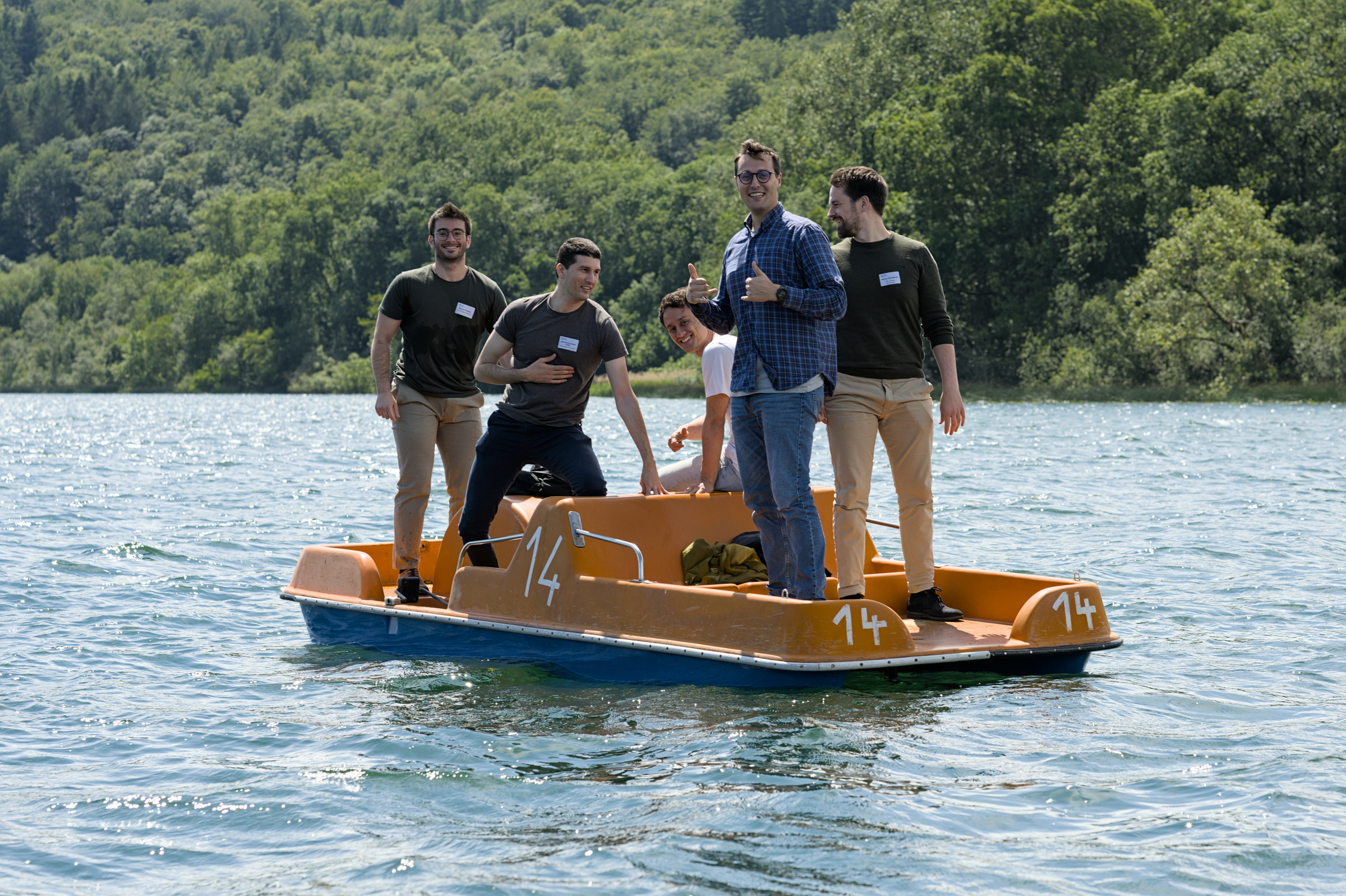 Together with his colleagues from SDL Energy Conversion, Ludovico enjoyed the NHR4CES Team Events.
 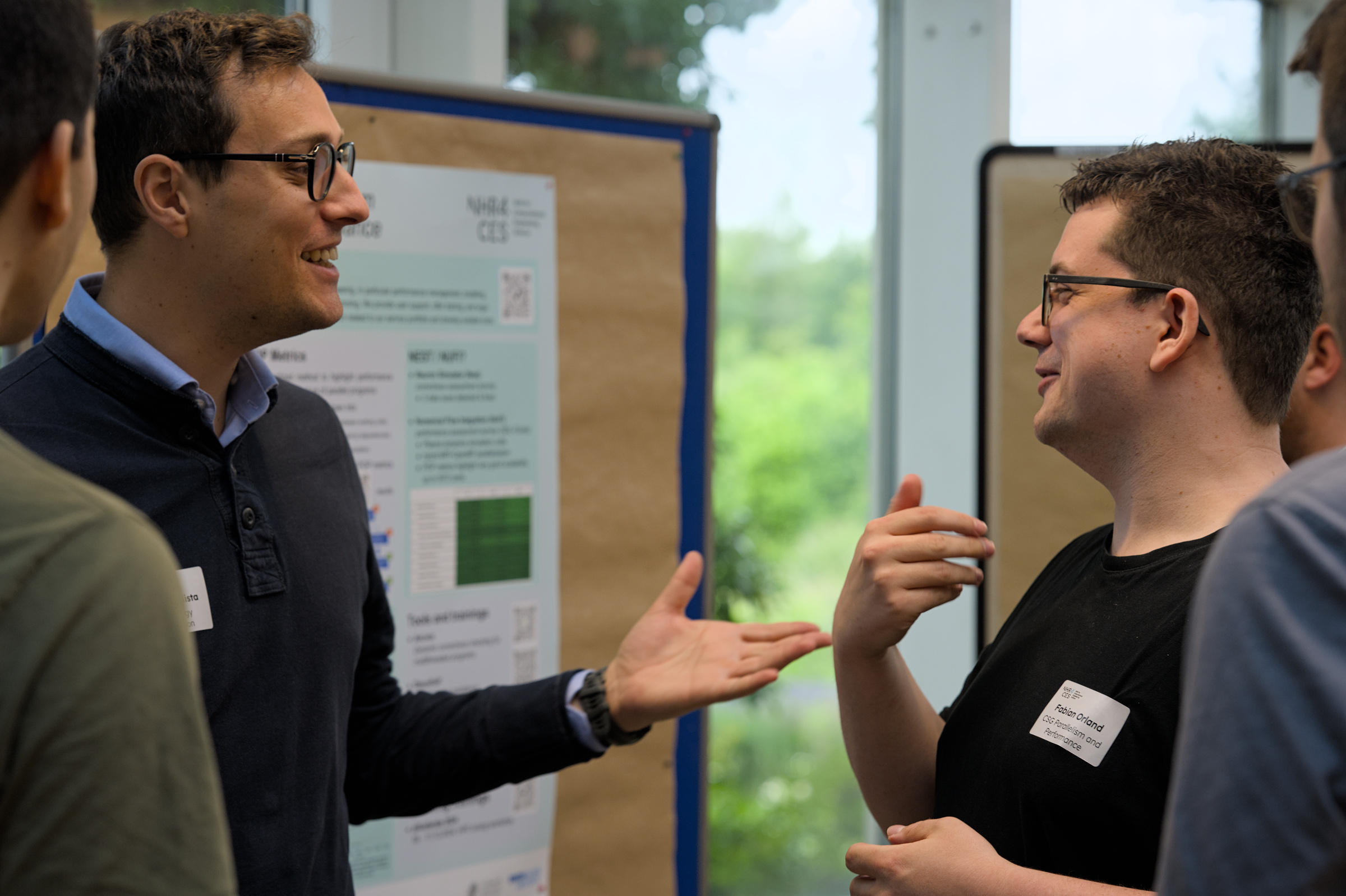 For Ludovico, the exchange with the different SDLs and CSGs was especially important during his work in NHR4CES.
 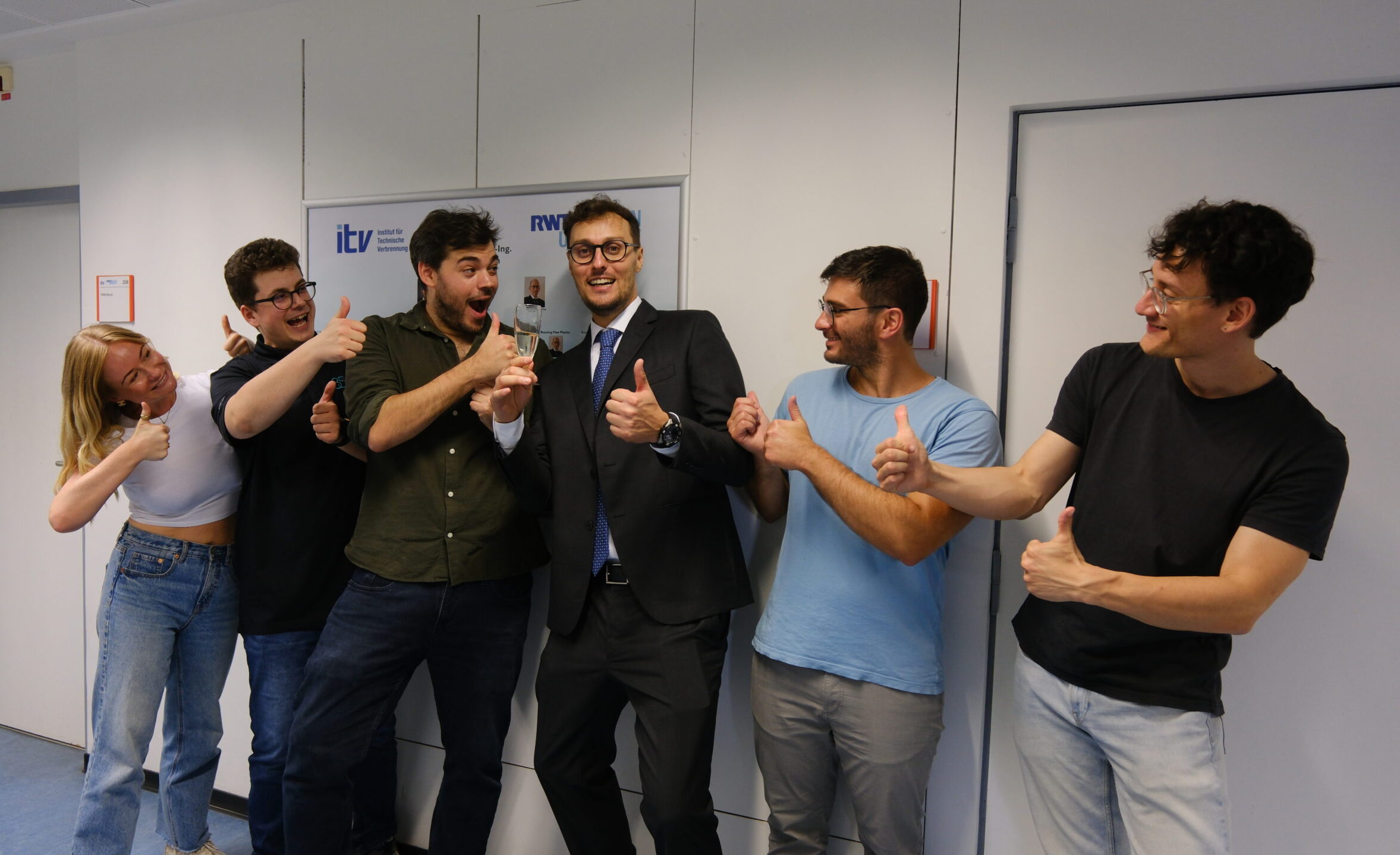 NHR4CES colleagues form Aachen and Darmstadt celebrated this big day with Ludovico!
 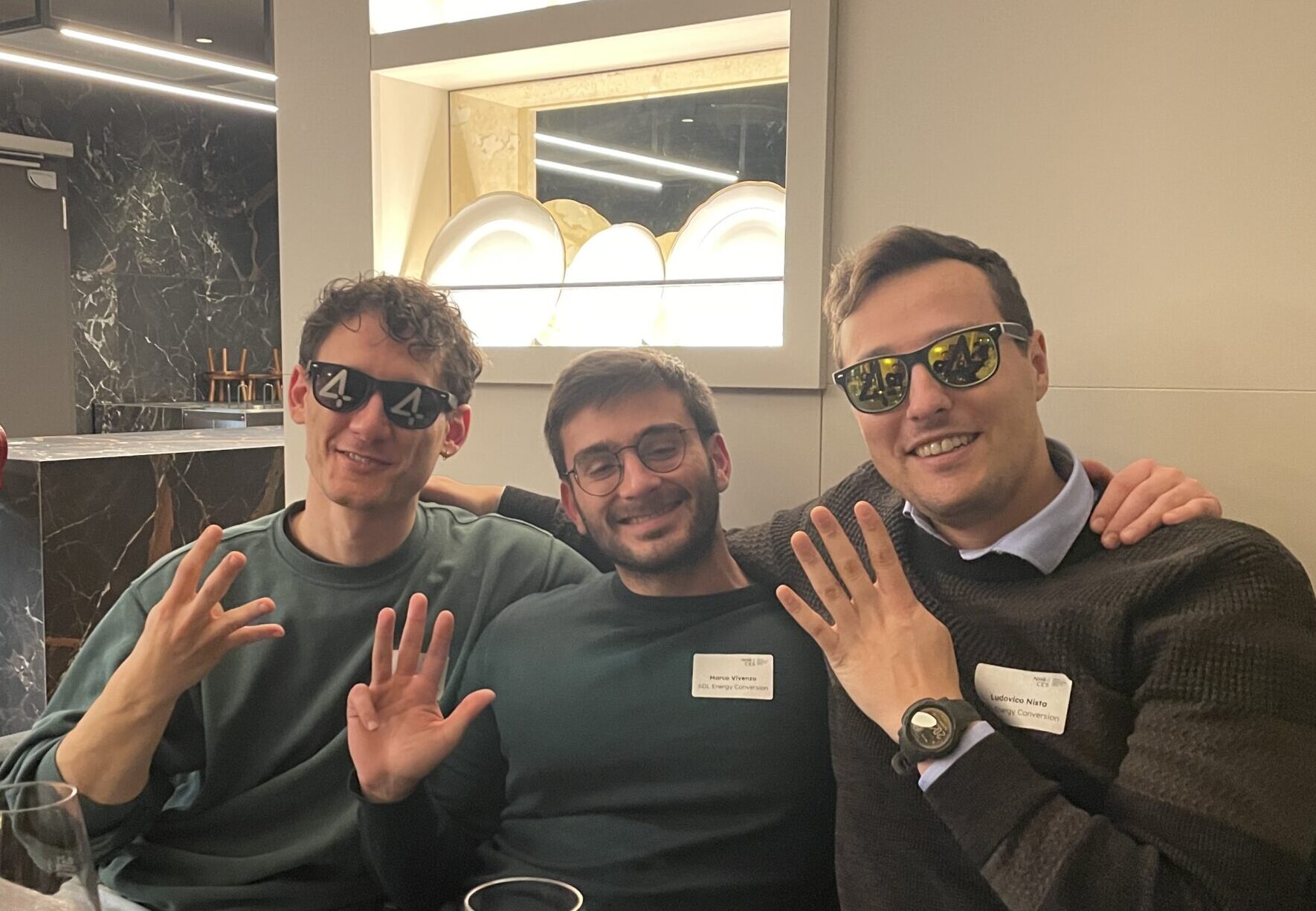 NHR4CES 4ever :-)
 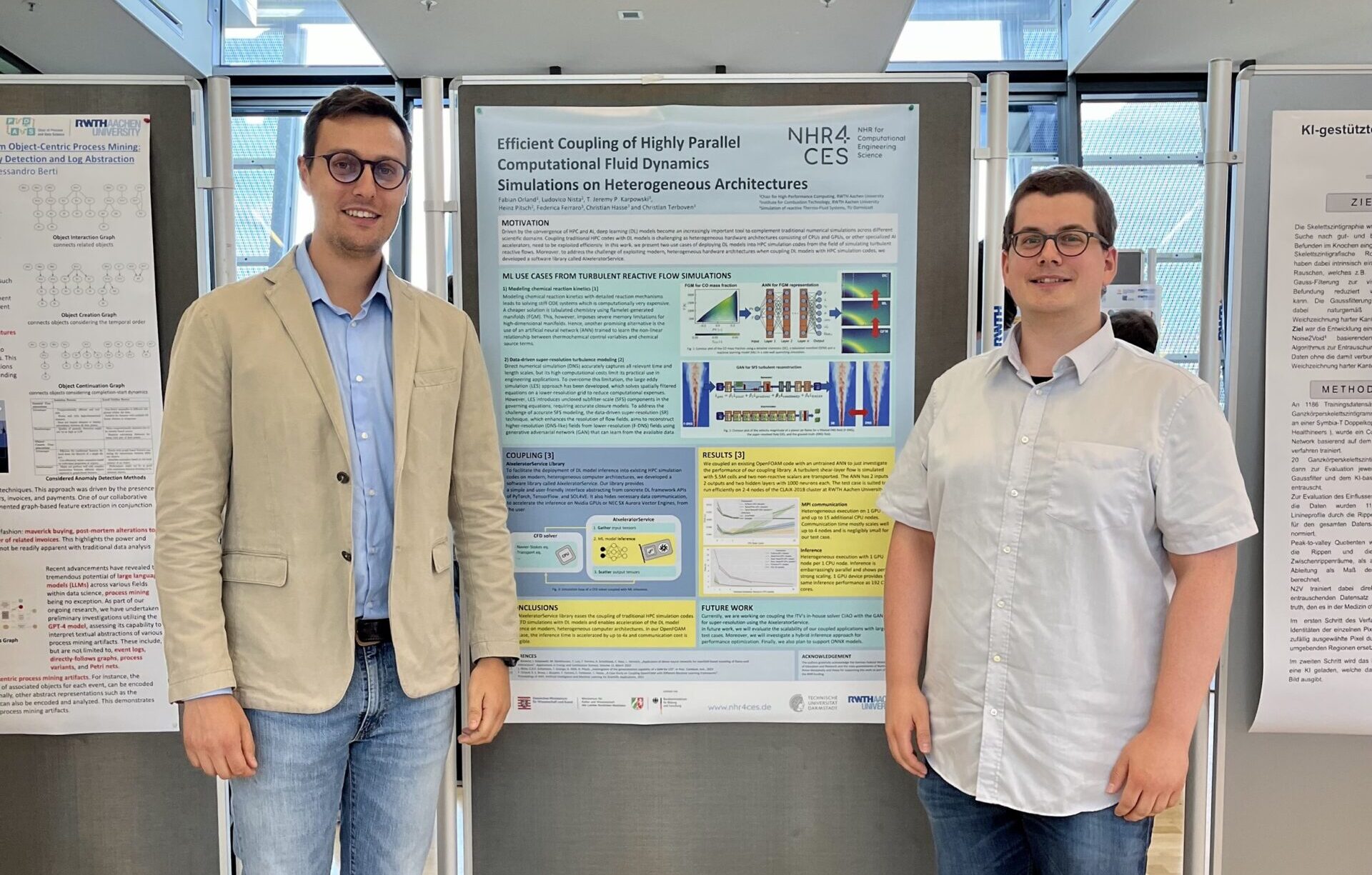 Ludovico was always a valued project partner - here together with Fabian Orland from CSG Parallelism and Performance.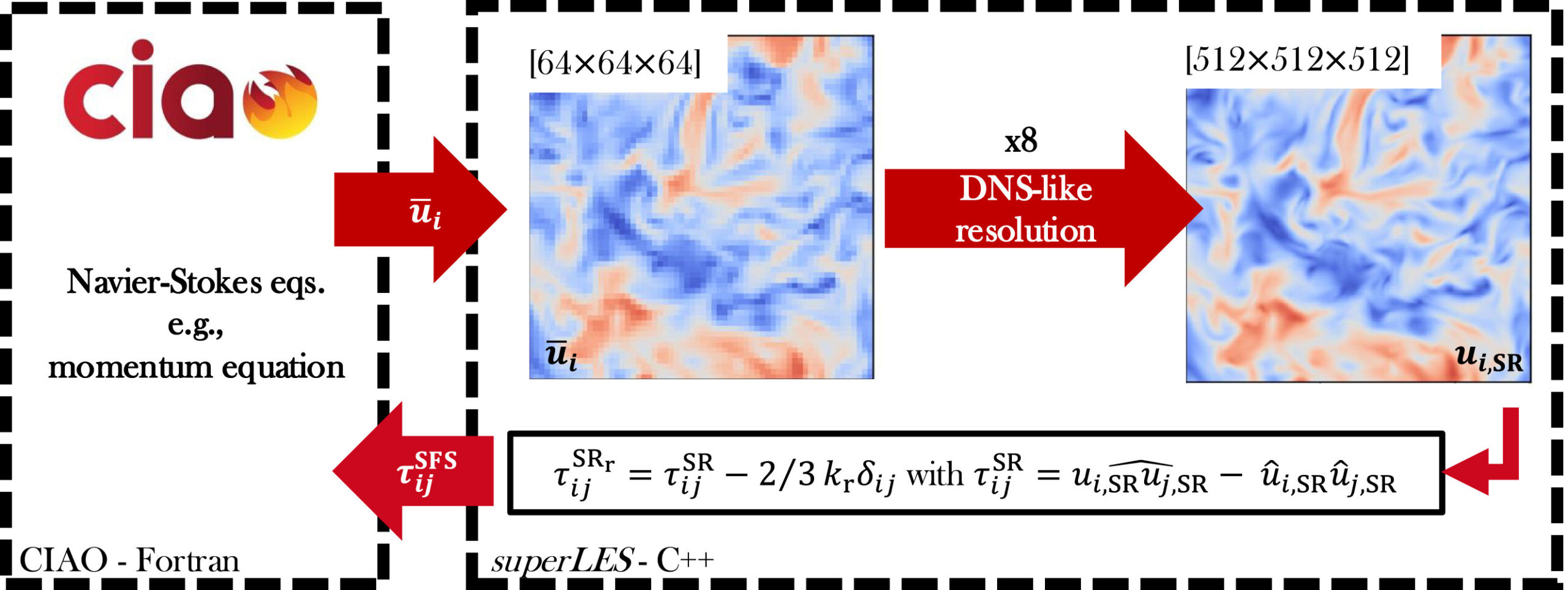
Joining NHR4CES and SDL Energy Conversion
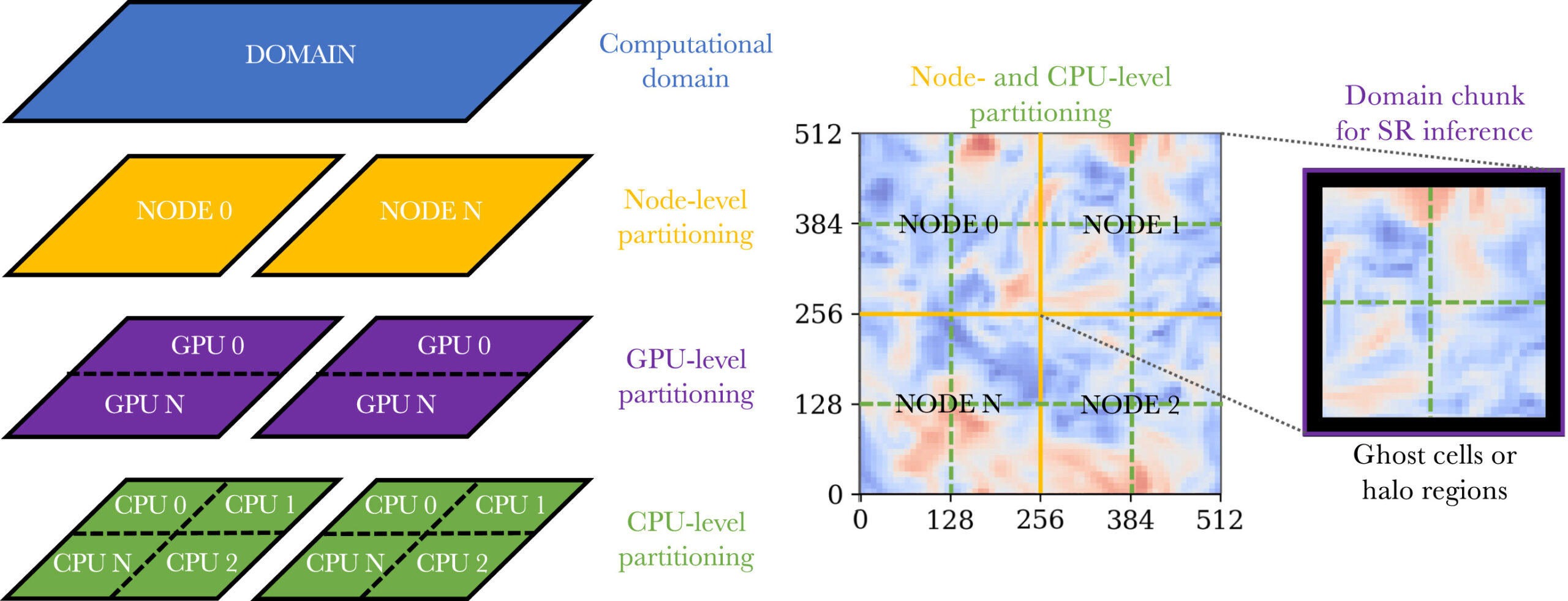
Ludovico joined SDL Energy Conversion following a suggestion from his supervisor, Prof. Heinz Pitsch, given the strong alignment between the SDL’s focus and Ludovico’s research on artificial intelligence methods for the simulation of reactive flows. Beyond this direct fit, what further convinced him was the way NHR4CES is structured. The project brings together Simulation and Data Laboratories (SDLs), each focused on a specific application area of computational engineering science, and Cross-Sectional Groups (CSGs), which address competencies relevant across all application areas, such as code parallelization and efficiency. This same logic is mirrored within the SDL itself, where different modeling approaches are investigated in parallel, all working toward the same goal, that of advancing the accuracy
and speed of current models for reactive CFD. What he has particularly enjoyed has been the constant interaction, both within the SDL and across the wider NHR community. “Being in touch regularly with colleagues from different backgrounds made the work feel collaborative rather than isolated. I also really enjoyed seeing the same underlying challenges tackled from completely different angles, whether applied to fluid dynamics, materials science, or medical applications, all with a strong common focus on HPC”, explains Ludovico, “It gave me a much broader perspective than I would have had working in isolation. On top of that, the annual team events and meetings were a real highlight, a great opportunity to meet everyone in person and strengthen the connections that made the day-to-day collaboration work so well”.
Generative Adversarial Networks for Closure Modeling in Large-Eddy Simulation
Ludovico’s dissertation focuses on using deep learning, specifically generative adversarial networks (GANs), to improve how we simulate turbulent flows. Simulating turbulence in full detail requires enormous computing power, so a common approach, large-eddy simulation (LES), resolves the large-scale motion directly and approximates the smaller, unresolved scales through a closure model. His work investigates whether generative adversarial networks (GANs) can improve how we model the small, unresolved scales of turbulence in large-eddy simulation (LES). Using a GAN-based super-resolution (SRGAN) approach, which jointly trains a generator that reconstructs the flow field and a discriminator that learns to distinguish it from high-fidelity reference data, the results show that the improvement over conventional methods comes specifically from this adversarial (discriminative) training.
As the discriminator becomes better at distinguishing reconstructed SR fields from high-fidelity data, it implicitly captures key physical properties of turbulence, acting as a built-in, physics-informed guide for the generator. Because this approach is computationally demanding, the work also explores ways to make it more efficient and finds that applying it at full resolution becomes impractical for realistic flow simulations. To address this, a new hybrid model is proposed, combining a traditional turbulence closure with a partial SR reconstruction, which consistently improves accuracy across different simulation resolutions and flow conditions, including ones the model was not specifically trained on. Taken together, these findings show that SRGAN-based methods, despite being more challenging and costly to train, offer a promising path toward more accurate turbulence models.
Academic Journey
Ludovico’s academic path:
2020-2026: Ph.D. in Mechanical Engineering – Institute for Combustion Technology, RWTH Aachen University, Germany
2018-2019: Master of Research in Fluid Dynamics – von Kármán Institute for Fluid Dynamics, Belgium
2016-2018: M.Sc. in Mathematical Engineering – Università degli Studi di Padova, Italy
2012-2015: B.Sc. in Physics – Università degli Studi di Padova, Italy
Looking ahead, Ludovico plans to shift his focus: Rather than continuing on combustion research, his work will move toward atmospheric flows and urban flow modeling. It is a new direction for Ludovico, but one he is genuinely excited about, and he is looking forward to seeing where it leads. We wish Ludovico all the best for his future!