Fabian Czappa Advances Computational Neuroscience Through Scalable Brain Simulations
Advancing natural sciences through HPC has always been one of Fabian Czappa’s key motivations as a researcher. Last week, he took a major step toward that goal: We are delighted to congratulate Fabian on the successful defense of his doctoral dissertation!
Since joining NHR4CES at its launch in 2021, Fabian is member of the CSG Parallelism & Performance and has contributed to research at the intersection of HPC, scalable simulations, and neuroscience.
His work focused on accelerating large-scale simulations and exploring how advanced computational methods can help answer fundamental scientific questions.
Fabian’s journey in NHR4CES
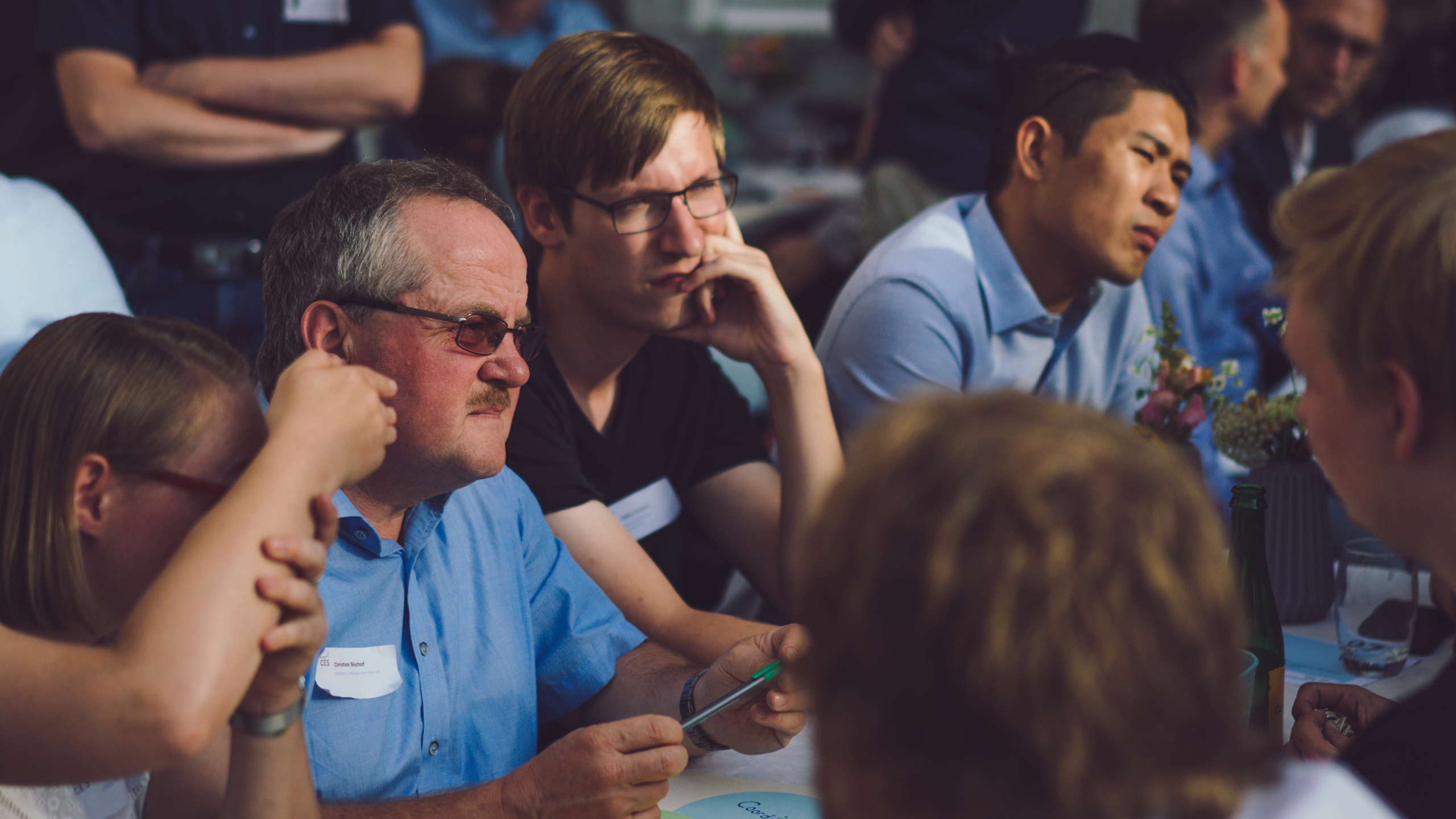 From the beginning – already at the NHR4CES kick-off in 2021 in Aachen – Fabian has actively contributed to NHR4CES and the CSG Parallelism and Performance.
 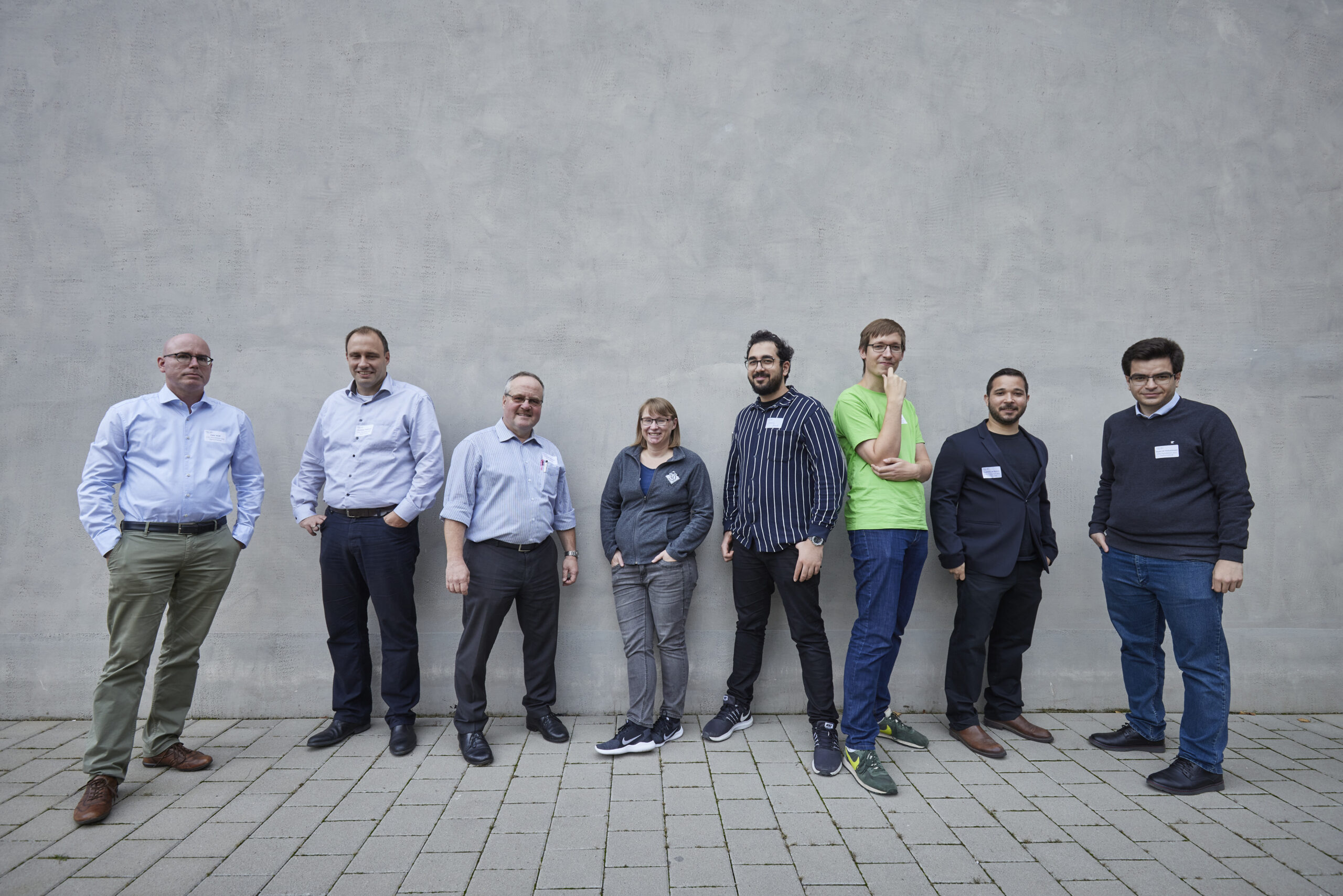 Fabian and his team members from CSG Parallelism and Performance. He shows that it doesn’t always have to be the classic blue shirt!
 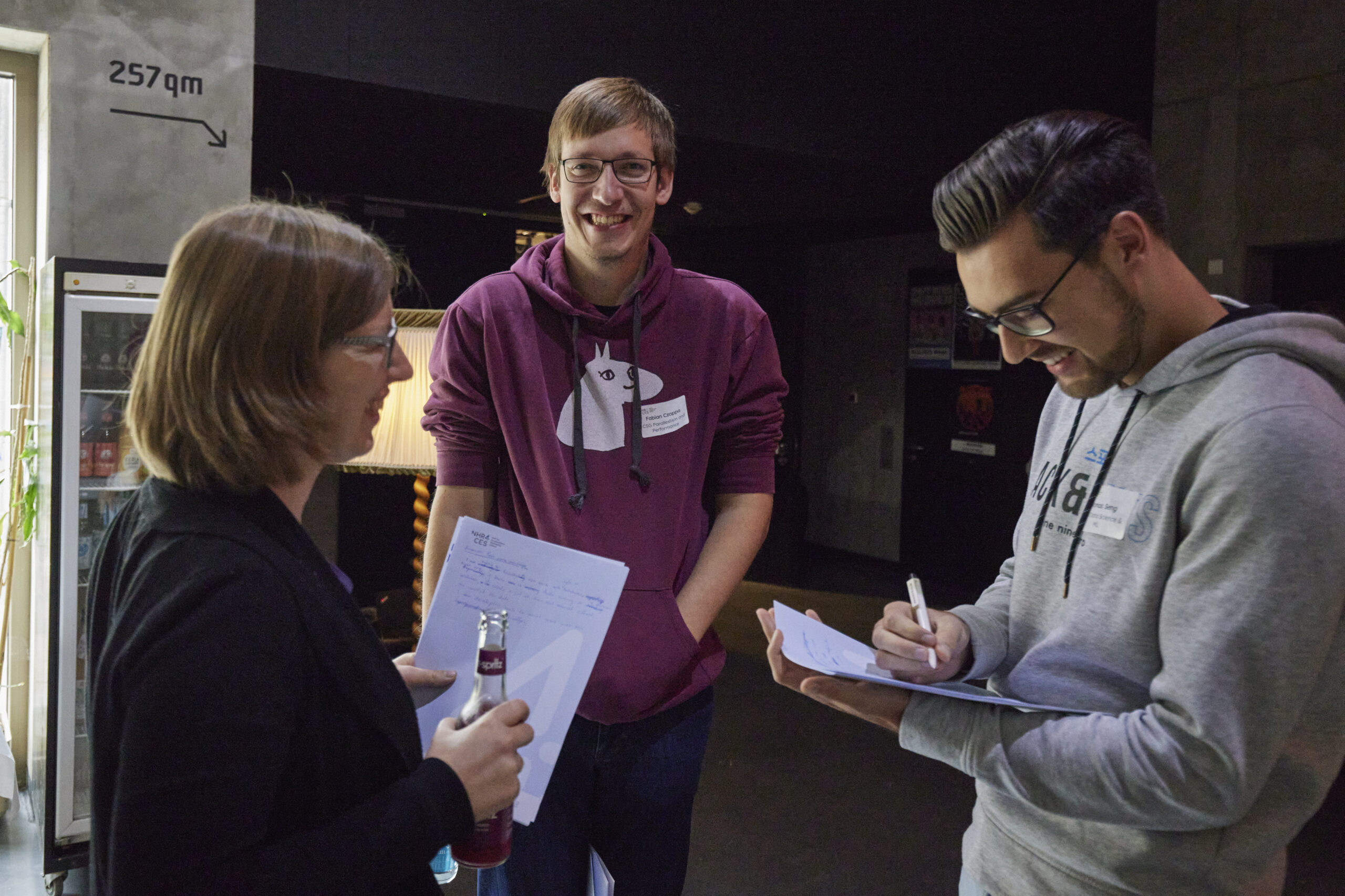 Always smiling: Here he is at the 2022 team event in Darmstadt with colleagues from the CSG Data Engineering & AI.
 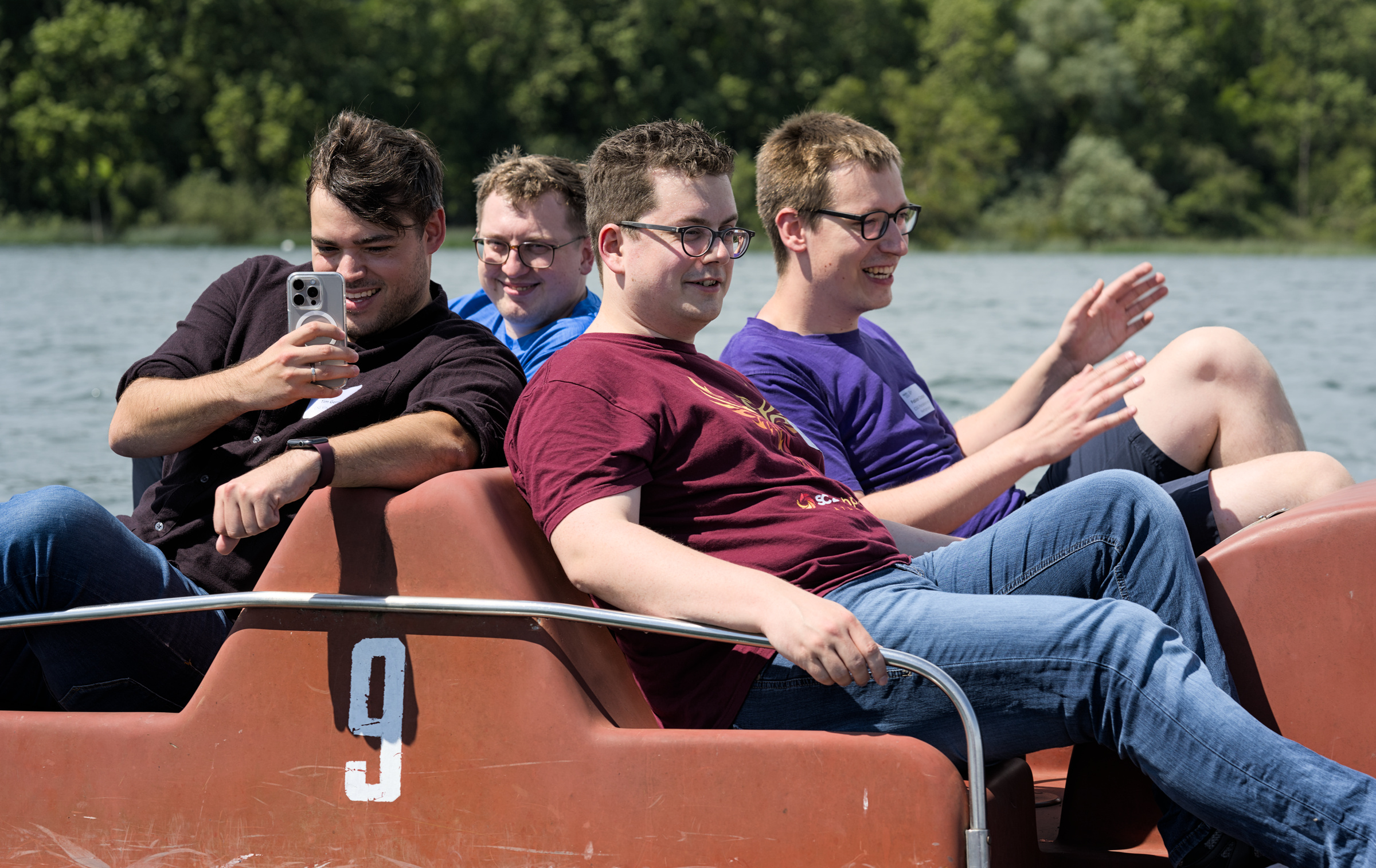 The collaboration with our CSG Visualization (left in the picture) is very important to him – and this connection was further strengthened during the NHR4CES team event 2024 at Maria Laach ON the Laacher See.
 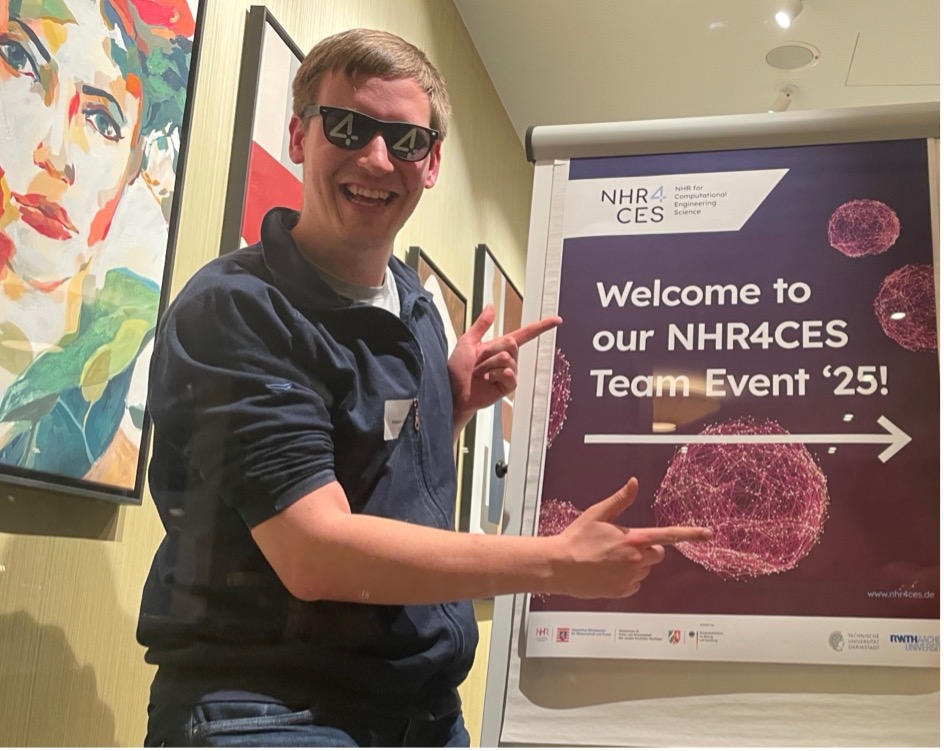 Always keeping NHR4CES in focus: It is a pleasure to have Fabian as part of the NHR4CES team!
 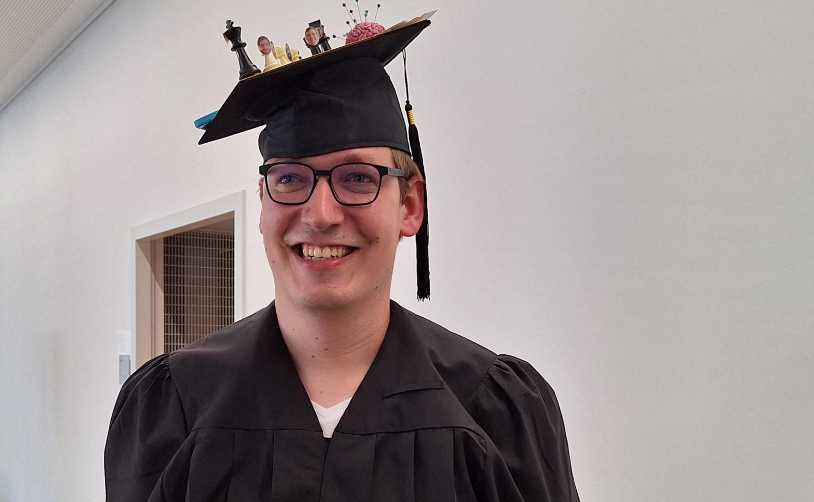 Successful Dissertation Defense: Fabian Czappa Advances Computational Neuroscience Through Scalable Brain Simulations
 Understanding Structural Plasticity in the Human Brain
Fabian’s dissertation investigates one of the most fascinating and complex systems known to science: the human brain. At the center of his research is the Model of Structural Plasticity (MSP), a computational framework that describes how neurons continuously form and remove synaptic connections to maintain stable activity levels.
The human brain contains around 100 billion neurons whose connectivity continuously changes through structural plasticity, the formation and removal of synapses. Although structural plasticity plays a key role in learning, recovery, and disease, only a few models capture these processes at large-scale brain levels;
one such model is the Model of Structural Plasticity (MSP), in which neurons adjust their connections to maintain a target activity level.
Fabian’s work develops and improves computational approximations of MSP using the Fast Multipole Method and the Barnes–Hut algorithm, providing both theoretical analysis and practical performance gains. Furthermore, it demonstrates that MSP alone cannot reproduce real-world data, introduces an extended model with a composite probability kernel, and shows that this framework can predict engram locations from patient data, opening new avenues for applications in neuroscience and clinical research.
HPC for Scientific Discovery
Throughout his doctoral work, Fabian’s expertise centered on accelerating scientific simulations, particularly through the efficient use of modern computing architectures such as GPUs. His research exemplifies the mission of NHR4CES: leveraging advanced computing methods to enable scientific discoveries across disciplines. Reflecting on his experience within NHR4CES, Fabian highlights the value of interdisciplinary collaboration: “I have always
advocated for diversification: Do not only focus on your personal work, but also branch out and meet other people, discuss their problems, and listen to their point of view.”
He particularly emphasizes the close collaboration with NHR4CES partners in Aachen and the support he received from colleagues across disciplines, for example expertise in scientific visualization.
Academic Journey
Fabian’s academic path combines a strong foundation in computer science with a passion for scalable computing:
2014–2018: B.Sc. in Computer Science, focusing on GPUs
2018–2019: M.Sc. in Computer Science, focusing on theoretical computer science and CPU architectures
2020–2026: Research Associate, focusing on scalable simulations
Alongside his scientific career, Fabian has remained
actively involved in the chess community, contributing to tournament organization, youth training, and competitive play. Following the successful completion of his doctorate, Fabian plans to continue exploring scientific challenges wherever they may lead. As he puts it: “The human brain is complex enough to occupy a large cohort of scientists for decades, and maybe me as well.” We congratulate Fabian on this important achievement and wish him continued success in his future scientific endeavors!